

Achieving independence for the sake of mutual interdependence
A Q&A with L.M. Sacasas, author of "The Convivial Society" newsletter


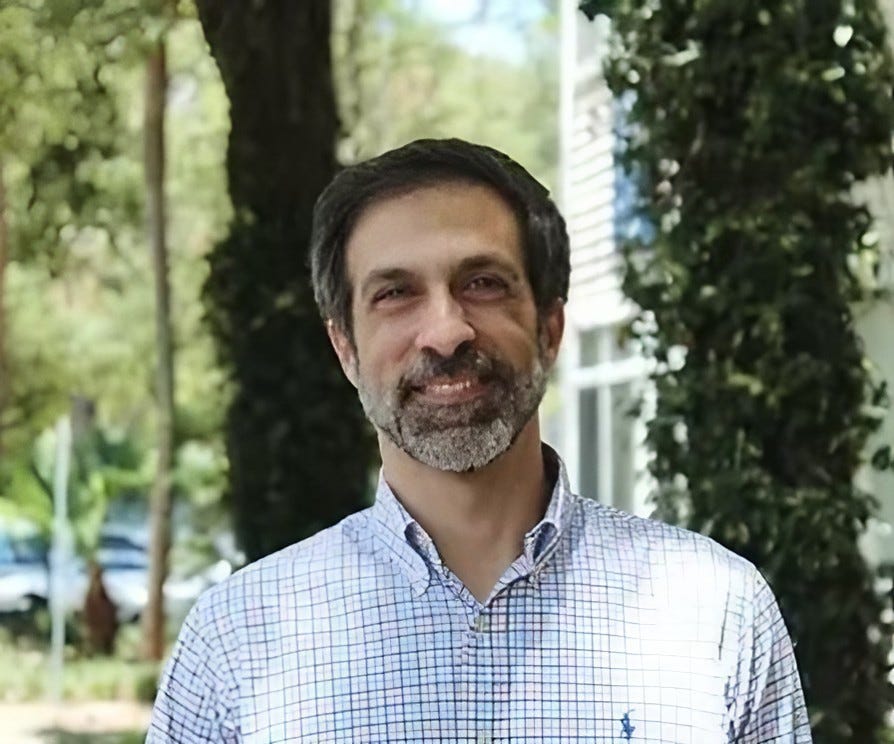
L. M. Sacasas is the author of The Convivial Society newsletter and the Executive Director of the Christian Study Center of Gainesville. No newsletter on Substack has shaped my thinking (or directed me to more sources for deeper reading) than The Convivial Society. It’s an exploration of the forces shaping our current moment of technological and societal change, grounded in the prophetic writings of thinkers like Ivan Illich, Lewis Mumford, and Hannah Arendt. I’m such a fanboy of The Convivial Society that, when I had my prep call with L.M. for this Q&A, I could barely stop thanking him for his time to have enough time to ask him my actual prep questions.
Fortunately, I was able to get myself (relatively) together for this Q&A, and it didn’t disappoint. We explored several questions that, themselves, could have made for full conversations. What does a tool for conviviality actually look like in practice? How does someone like L.M. hold the responsibility to bear prophetic witness with the responsibility to build the imagined convivial society? What does the right relationship with our tools look like, such that it can cultivate both independence and interdependence?
This conversation was incisive, expansive, and challenging in all the best ways. Please consider giving the full Q&A a read below. And please do subscribe to The Convivial Society on Substack if you haven’t already. It’s one of the few “must-read” newsletters for me each month, and I imagine it may become a “must-read” for you, too (if it isn’t already).
- Sam
You chose to name your newsletter The Convivial Society, a phrase from Ivan Illich’s Tools for Conviviality. Can you share a bit about why you chose that name, and what Illich imagined a “convivial society” could look like?
The title of the newsletter pays homage to Ivan Illich’s Tools for Conviviality, but also more subtly, to Jacques Ellul’s The Technological Society. The convivial society is something opposed to the technological society. I saw Ellul, from whom I’ve learned a lot, as a strident critic of the way that modern technological society is ordered. Illich, himself, is indebted to Ellul: There is a genealogy of ideas shared from one to the other.
For Illich, conviviality involves “learning to live well together,” and it’s an alternative to the life implied in industrial-scale institutions. It’s worth noting that Ilich uses the terms “tools” and “institutions” interchangeably. Illich defined convivial tools — as opposed to industrial-age institutions — as human-scaled. A convivial society does not ask the human to operate at the scale of the machine, but rather configures human relations to be more hospitable to proper human scale. That can be in terms of scales of speed, scales of size, or scales of power. There are various ways in which we operate at scales that are not conducive to the flourishing of the embodied, fundamentally limited creatures we are.
There’s also a freedom in conviviality for Illich. In his view, in an industrial society, we become slaves of disabling institutions. Illich believed institutions that set out to improve our world, once they pass certain thresholds, become counterproductive, even destructive. They create dependencies rather than empower. Illich wanted us to operate with tools that we could enter into a relation of freedom with; we would not be subservient to the tool, but the tool could serve our own human ends.
The last thing conviviality suggests is the practice of hospitality. It was this simple act of welcoming, of sharing a meal, and of sitting across the table from somebody that became very important for Illich in his later writings.
To make it more concrete, what does it look like when tools and institutions pass the realm of human-scale and become counterproductive to human freedom?
In his early work, Illich sees the professions that gather around counterproductive tools and institutions as disabling. The effect of these professions is not to give us the strength, imagination, or resources to confront the world in networks of interdependence. Sometimes one could read Illich as if he is advocating for rugged individuals who are able to care for themselves and make their own way in the world. But there’s an important passage in Tools for Conviviality — which I don’t know quite by heart — where he says that we ideally achieve autonomy or independence for the sake of mutual interdependence. We learn to rely on each other as parts of communities that have the strength and resources to order their lives according to their values. In these communities, we do not have to cordon off areas of life and hand them over to the offices or auspices of an institution.
One striking example of this, which gives us a sense for how much the world has changed, involves burials. While writing in the 1950s, 1960s, and 1970s, Illich talks about how a generation ago, burials were handled within the community. You mourned the deceased in their home. They were buried by their friends. It was an intimate, communal affair. Now this has been handed over to the undertaker: This communal, familial rite that humans have performed for themselves since time immemorial has now become a service rendered at cost by a professional class. Illich sees this sort of pattern as an outcome of the institutions of the industrial-age.
Another example of this is at the beginning of Deschooling Society, where Illich says that for many people, “their ability to learn will be undermined by their association of learning with schooling.” The institution of the school mistakes a process in the administration of a service for the actual outcome. The one thing students learn in school is how to mistake process for an outcome and a diploma for competency. We can see this: Schools became credentialing factories that give us a pass into adult life, rather than places that genuinely educate for freedom and competency. Illich would say you see this because there is no end, just a continual accretion. These days, an MA or more is required for entrance into certain fields. Yet, we know instinctively that what we’re getting is a piece of paper that gives us entry. This escalation is part of the counterproductivity that Illich identifies.
I know you said Illich used “tools” and “institutions” interchangeably, but what you just shared seemed like it had more to do with institutions and professions. What, specifically, does a “tool” against conviviality look like and a “tool” for conviviality look like?
I would point to tools where we outsource: GPS is a good example. It feels like it empowers you, and it gives you this ability to navigate new cities that you may be visiting or your own city. But the cumulative effect is that all of these individual instances of being seemingly empowered — or, of gaining a measure of efficiency in getting from point A to point B — ultimately de-skills the person who finds it almost impossible to operate without that tool.
It’s amusing to me to talk to those who have never known a world without GPS. People used to just get around. They eventually learned their way around the city. They figured out how to read the city grid. They asked for directions. It worked, and there was a measure of competency that came with that. Now, a lot of people joke that they can’t navigate their own town without GPS. That may seem like a trivial example, but it’s one instance in a larger pattern of individuals feeling increasingly dependent on the tool. They lose competencies, and thus a sense of confidence, purpose, satisfaction, and autonomy in the world.
The convivial tool is basically the opposite of the GPS — a tool you can use in a way that empowers your skills. The map and the compass are very different tools from the GPS device. They require something of you. They will train you in their use in a way that you gain skills. That’s part of the picture for Illich.
The underlying question has to do with our vision for human flourishing: What is the good that we are after? If our vision for human flourishing is to optimize the self as a node in the technologized market network and serve that system to become efficient consumers and producers, the tools that help you get there are of a certain sort. But if human flourishing consists in relationship, in the assortment of skills that sometimes were labeled arts — the art of dying, the arts of memory — then they’re not skills to be optimized, or techniques to be applied, but rather arts and virtues to be cultivated.
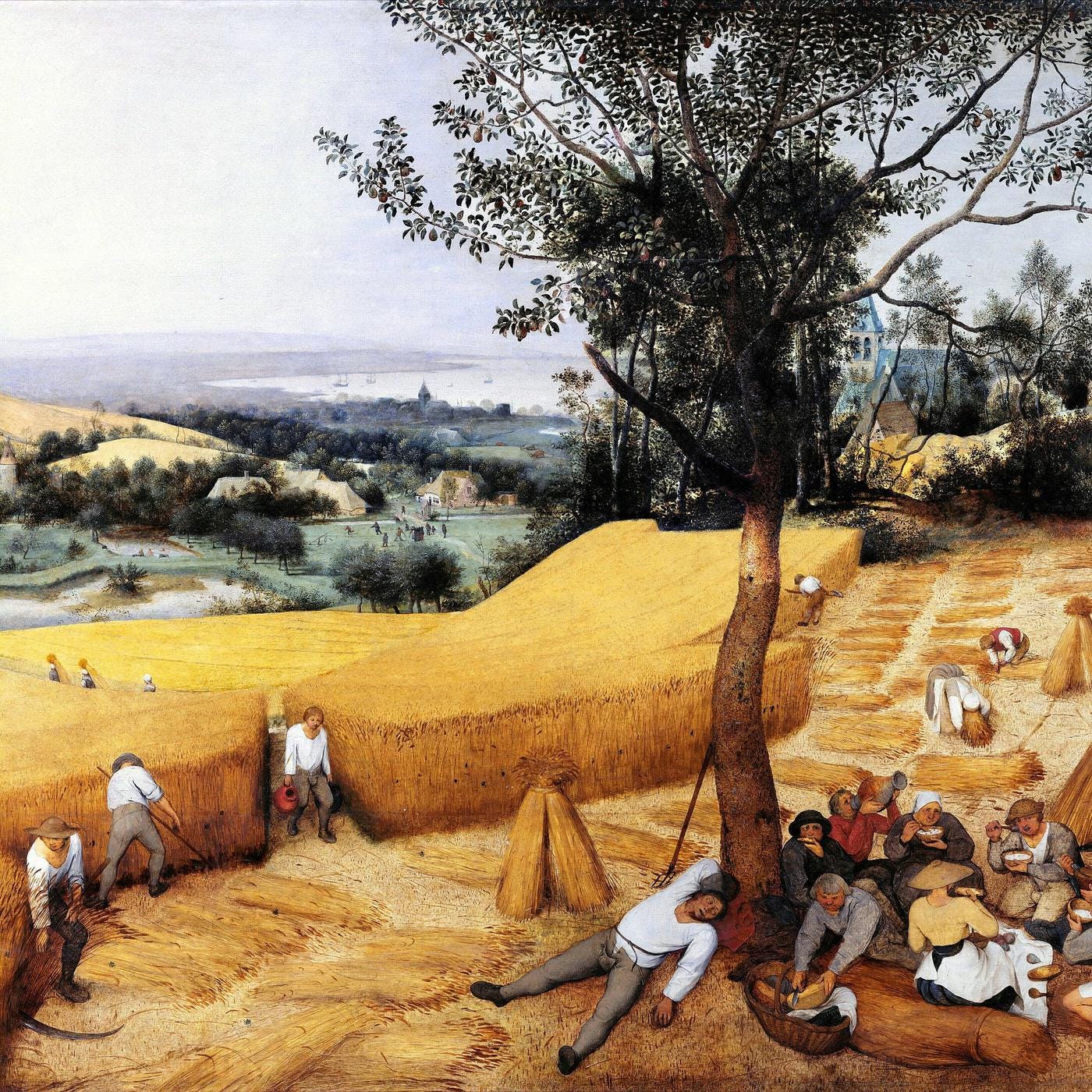
Recently, I was at a conference and I was asked: “What technology is an ideal technology?” I usually freeze in those moments, but I had Hannah Arendt on my mind, so I said, “Well, the table.” Things that we don’t think about as tools can be very conducive to flourishing. The table is a piece of human artistry and craftsmanship. It serves a purpose. It brings people together while maintaining their distinction. It allows for conversation, for feasting, for celebration.

Before we go deeper on Illich, Ellul, Arendt, or anyone else, I’d be curious to hear about your pathway into writing, teaching, and becoming such a faithful steward and carrier of their traditions?
As part of my theological education, I was reading The Way of the (Modern) World by Craig Gay, a sociologist who was examining how we often fail to live in accord with our professed beliefs. We have professed values, and yet there’s the evident disjunction between our practice and those professed beliefs. What accounts for this disconnect? In certain strands of religious traditions, one answer to that question is insufficient knowledge: You just need better information, better theological education, and the like.
But Gay suggested that we are formed by the habits implicit in our economic structures, political structures, and scientific technological structures. As we participate in those structures at a pre-rational level, we are being shaped and formed by them. I began to care about understanding the technological structures of our society, in part, because I cared about becoming a certain kind of person. I cared about closing the gap between my professed beliefs, moral aspirations, and actual practice. This is how I got introduced to the work of Arendt, Ellul, and Lewis Mumford — all of whom are very important to me.
I later read Alasdair MacIntyre’s After Virtue, which was my introduction to virtue ethics and the importance of practices. It reinforced caring about tools because they enter a loop of mind, body, and world. Tools are not just an expression of our desires, but they form our desires. Tools are not just an expression of our agency, but constrain and empower our agency. The media ecology angle also became a part of my formation — through Neil Postman, Marshall McLuhan, Walter Ong, and others — so that it was not just our action into the world that was being mediated by our tools, but our perception of the world. In particular, whatever tools we use to “see the world” mediate the world to us in a specific way.
I’m continually drawn to that larger question of what it means to be a human being, and to the moral dimensions of human existence — and so were these writers. I’ve often described my writing as an attempt to lead others to their work. One of the best compliments I can be paid is, “I read about Jacques Ellul, or Simone Weil, or Hannah Arendt in your work, so I went out, bought the book, and read it for myself.” Mission accomplished.
Your writing has directed me to a lot of these thinkers. This is making me think about your “Amulets Against the Spirits of the Age” piece. In it, you shared this quote from Simone Weil that I found myself returning to frequently last year: “You could not be born at a better time than the present, when we have lost everything.”
I read your work as situated in this prophetic tradition of many of the people you’ve already mentioned — Simone Weil, Abraham Joshua Heschel, Ivan Illich, Hannah Arendt, Marshall McLuhan, Lewis Mumford, and Wendell Berry. How do you think of your role in contributing in this moment? How do you hold the responsibility to bear prophetic witness alongside the responsibility to help build the imagined convivial society?
I’ve struggled with this a bit. Because inevitably the question is, “Well, what then? What now? What’s the practical application?” I understand that question, and I sympathize with it. However, I’ve made peace with the fact that I don’t know that it’s for me to imagine what the answers are. I tend to highlight questions because I think part of the problem is this rush to the answer. Part of what I want to do is slow down our thinking — both for myself and others.
If you press these questions far and deep enough, you find a very different orientation toward the world. It’s the way of being that sees the world as a set of problems to be fixed and to which engineering solutions can be applied. The world becomes a field for us to realize our own aspirations, desires, and wants — where we bring to bear our technical apparatus and knowledge in such a way that the world conforms to our desires and wishes, so that we can act in it with power. This perennial temptation has particular force in the modern world, and it’s explicit in the Western context, where humanity has gained an enormous amount of power over the world (and much of it for the good).
But what gets lost in that way of thinking is a relation to the world that perceives it, first and foremost, as a gift — something to be received, known, and loved in its own right. Obviously there are many philosophical, metaphysical, and religious assumptions at work when I’m articulating that distinction. Because of my own metaphysical and religious commitments, I try to see the world as something to be received with gratitude, as a gift. But even Hannah Arendt — who’s not, herself, a religious person — talks about receiving the world as a “gift from nowhere,” but still as a gift.
That doesn’t mean we should become passive participants in history, but where you start matters. Whether you recognize any constraints to that project matters. Whether you have fundamental gratitude out of which you are working — and a love out of which you are working — that matters a great deal.
I am trying to understand these deeper patterns and logics at work in the modern world, question them, and help recalibrate our fundamental orientation to the world. I am actually a temperate and moderate person, yet all the thinkers I’m drawn to are much more radical in their tenor, temperament, and writing. So that line from Simone Weil is purposefully evocative and challenging. These thinkers push us to ask deeper questions — to the degree where we are uncomfortable with the practice and conduct of our own lives.
Well, you may not agree, but one area where I feel like you’ve been bearing prophetic witness — or, at least, helping people make sense of the world — involves what we’re experiencing around AI. Your most recent piece on “Manufactured Inevitability and the Need for Courage” helped me connect some dots in my own experience.
Just yesterday, I noticed that when I opened Gmail, it was offering to summarize my conversations and automatically complete my sentences. This is what I had in mind when I wrote about manufactured inevitability. People want us to believe that all of this is inevitable — that it’s a natural force, and they’re not responsible for it — and that “resistance is futile.” It’s framed as if we’re facing a choice: Either jump on the bandwagon, or get left behind. Yet, what we see is that this inevitability is manufactured: I didn’t ask for Gmail to auto-summarize or auto-write my emails, but now I have to search through the settings to figure out how to disable it.
A critique of that rhetoric has to be paired with the recognition that you can’t put genies back in the bottle. Once tools are created and put into general use, you have to cope with the world in which these tools exist. The concept of “technological momentum” from the historian Thomas Hughes is helpful here. Early on in development of tools and systems, there’s flexibility. Things can go one way or the other. But over time, especially as infrastructure is developed, you get a momentum that locks certain tools into place and makes it hard to operate without them or against them.
But my chief problem with the rhetoric of inevitability was that it was deployed by those who wanted to foreclose our thinking and judging. It doesn’t want us to think about whether this would be a good development or not for us. Often, it was assumed that it would be good — the new device, the new efficiency, the new mode of optimization — but good for what and good for whom? Maybe good for the bottom line of a company. Maybe good in discrete ways for some individuals. But many of these tools have not been good for us.
I’ve been talking about AI over the past year, with reference to Joseph Weizenbaum, as a fundamentally conservative technology. It is being constructed and deployed to save the appearances of the old systems that we’ve been operating on that may otherwise teeter and collapse. This collapse would give us the freedom, in the spirit of Weil, to imagine new and better forms of life. Weizenbaum argued that computation arrived in the second half of the 20th century to save the day for these older, bureaucratic, often lifeless institutions. AI is being deployed to do the same thing — saving those institutions, ways of life, and modes of being — rather than allowing us to imagine alternatives.
What do you see as a better way for us to relate to this so-called inevitable technological “progress?”
I had an about page on my first blog that articulated the idea that neither a reflexive antagonism nor an unthinking adoption were the right mode. Neither of them had critical reflection. As Arendt put it, “We ought to think what we are doing.” But we need time for that. We also need communities to do this in. Should I decide that adopting certain technologies is not conducive to my own vision of human flourishing — for myself or for my family — there are a few things that I could do within my household. But there’s more that I can do if I’m working with others in small-scale communities. Of course, one of the trends implicit in the technological structures of modernity is that they isolate us. They make it difficult to form the moral communities of deliberation and practice that can help us slow down, think, and make choices.
I once wrote about the tech-savvy Amish, who understood that the adoption of a new tool wasn’t a matter of moral indifference. It wasn’t a neutral thing that you add into the community. They understood that communities are ecosystems. When you introduce a new species into an ecosystem, you don’t just get the same ecosystem plus a new species — you get something wildly different, or, possibly, even ecosystem collapse. So, the Amish decided that they would make deliberate choices about the tools that they introduced into their community. They’re not anti-technological, and they’re not trying to lock in the 19th century, but they are trying to preserve a certain form of communal life.
The advantage is that they’ve managed to operate within small-scale communities. They have that space of moral deliberation, a measure of communal authority, and collective buy-in to their shared project. Most of us don’t have those things, so we find ourselves constructing the communities we need to sustain us as we simultaneously attempt to make the choices we need to sustain us.
In the beginning, you said something about how Illich blows up this supposed tension between freedom and community. Typically, autonomy and community — individualism and communitarianism — are presented in direct opposition with one another, but what I heard you say is that genuine freedom is found through interdependence, or vice versa. Before we close, can you draw out this line of thinking further?
One way I’ve formulated this to myself is, “What is it good for a human being to do, regardless of whether a machine can do it as well or better?” Even if I grant that this AI tool is able to do a task as well as humans, even if it could pass whatever variation of the Turing Test is appropriate to this domain, the question is not, “Can the machine do it?” The question is, “Ought we still to do it anyway, even if we do it worse?” G.K. Chesterton has this line about how “anything that’s worth doing is worth doing badly.” If it’s worth doing, it’s worth doing, period.
I thought about this a couple years ago, when AI-generated images were becoming less laughable. Here’s this tool that can produce this sophisticated, glossy image that I could never produce myself. I couldn’t use computer software to generate it. I couldn’t draw it. So do I then stop drawing? If my child presents me with a rough, childlike picture of our living room, do I say, “You know, you could have just prompted DALL-E?”
No, of course not. Because that seemingly inadequate, comparatively deficient rendering was satisfying. If she were to keep at it, she would cultivate a skill. There was something she could take pleasure in. There’s something good about that attempt, regardless of the quality of the outcome. And I think this goes back to that question of, “What is it good for us to do even if a machine can be made to do it as well or better?”
Because as we learn to do things and we persist in doing things, we build up a reservoir of skill, depth, capacity, and autonomy. Then we can call on one another to help one another in community. Douglas Rushkoff recently wrote a piece about drills and neighbors that exemplified how this autonomy and interdependence could be complementary. In it, he says something like: “You don’t need to go to the Home Depot and buy a new drill. You can go across the street and ask your neighbor to borrow his.” Maybe your neighbor then says, “Well, I’ll come over. Let me help you.” This is how you build resilient communities. You can stand back from that work and realize that you have saved yourself some money. You have accomplished something that you can say, “I did this.” And, you did it with the help of your neighbor.
When you do something with somebody, you build this little shared memory. It’s a thread in the fabric of the community that you’ve just introduced. You do that enough, and you begin weaving it more tightly. Because we are dependent creatures, we can re-learn to depend on one another. We can re-learn to build trust. I think there’s a path there. But if we choose to allow the machine to continuously usurp our roles, functions, skills, and talents — however middling they may be — we will become more and more dependent on these tools and institutions, and we will become less capable of the interdependence and mutual aid that’s fundamental to our human existence.
 | A guest post by
|
Big fan of this interview. For two reasons, there's a thread of thinking that is becoming more apparent to me about the need to draw a distinction between what is means to be human and what we become when we serve the system. L.M. provides good insights illuminating this line of thinking. I've come across the book "Against the Machine" by Paul Kingsnorth which seems to take a direct view of this issue. I'm looking forward to reading it. And number 2, I spent a lot of time at the Christian Study Center in college and it's good to see that its in good hands.
Great interview