

"We are relational creatures trying to live as if we're not, and it's killing us"
A Q&A with writer and thinker Elizabeth Oldfield, author of "Fully Alive" and host of "The Sacred"


Elizabeth Oldfield is a writer and thinker who explores how we can “tend to our souls, stay loyal to our values, and seek spiritual core strength in these trembling times.” She’s the author of Fully Alive: Tending to the Soul in Turbulent Times, and writes one of my favorite newsletters by the same name. She’s the host of The Sacred, a podcast about our deepest values and the stories that shape us. In her past life, she was the Director of Theos, a UK-based think tank that explores the place of religion in society.
I’ve gotten to know Elizabeth throughout the past year, and I’ve found that I leave each of our conversations with at least three new reframes for how I think about spirituality, relationship, and community. This latest conversation between Elizabeth, me, and Sam Wolf was no different. We explored her idea of “friendship” as her “theory of change.” We discussed how and why we must account for the “sinfulness of the human heart” in relationships and community. We interrogated the possibilities and limits of policy to create the conditions for connection — the “unavoidably spiritual” thing that “we are most made for.” And we collectively asked: what must we do, and how must we be?
If you’ve been asking questions about both the civic and the sacred, this Q&A is for you. If you’ve been wrestling with the tensions between inner change and collective formation, this Q&A is for you. If you’re looking for a healthy dose of spirit and aliveness this morning, this Q&A is for you.
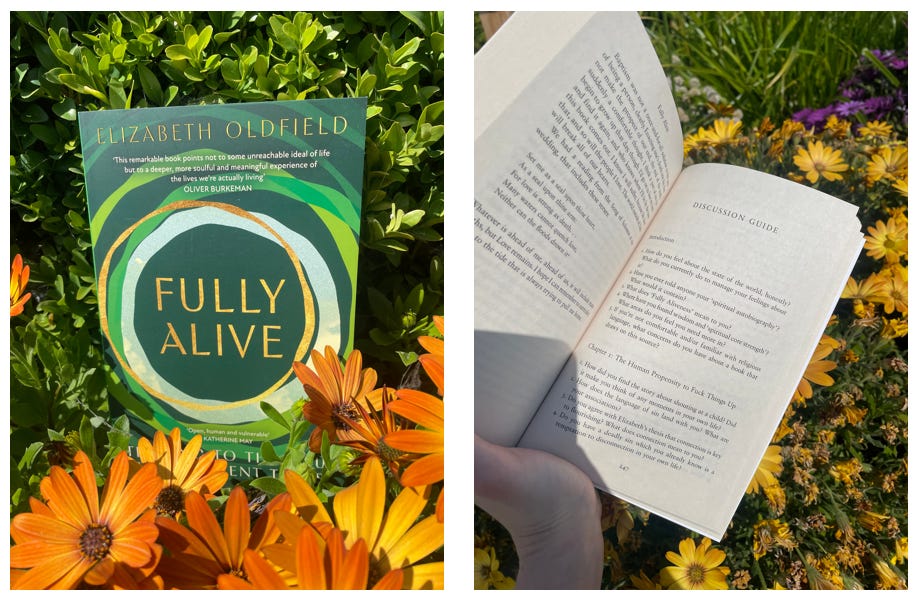
Please consider giving it a read. And if you want to continue engaging with Elizabeth’s work, subscribe to her newsletter, follow the podcast, and buy the book.
- Sam P.
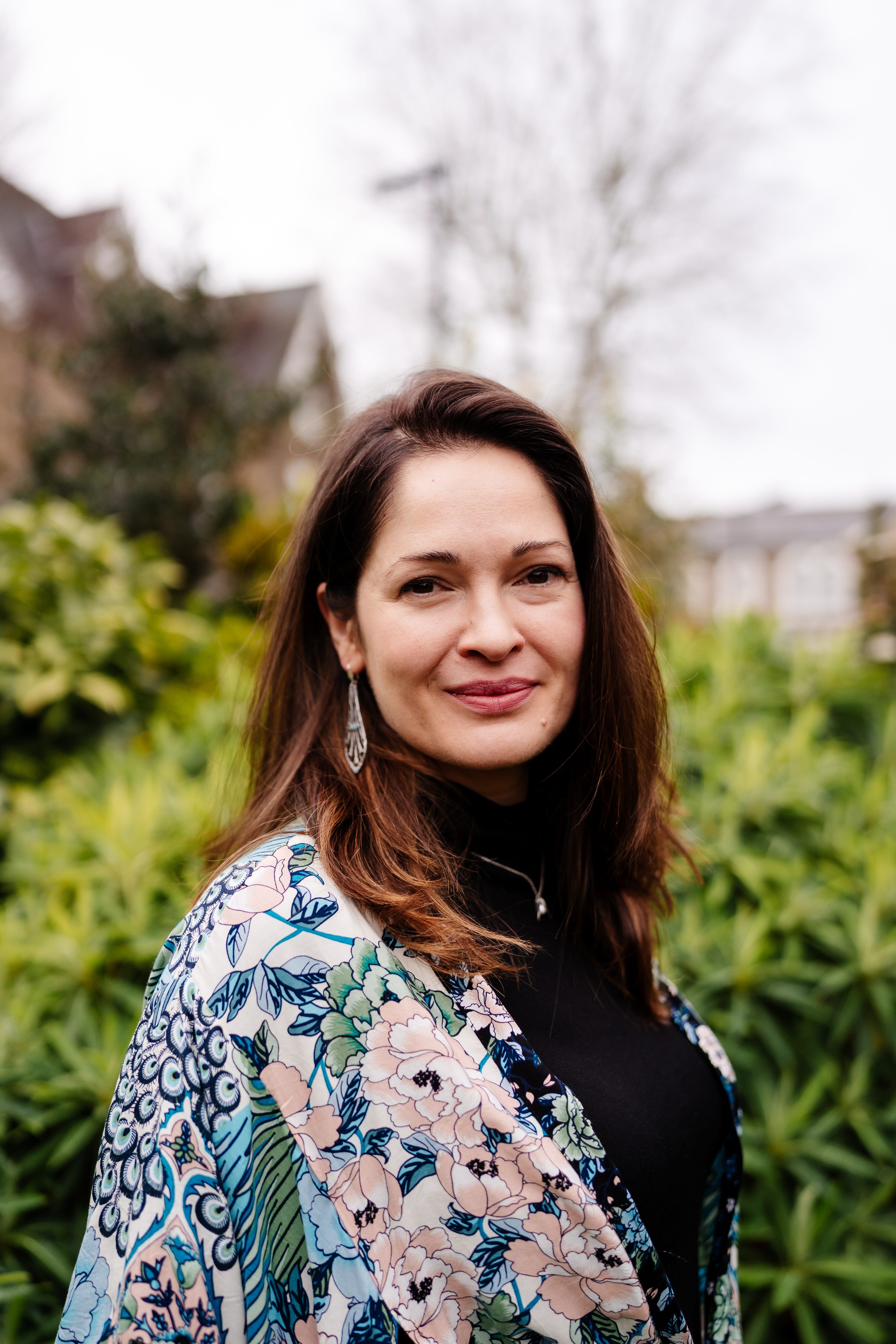
Sam Pressler (SP): The last time we spoke, you described “friendship” as your “theory of change.” It’s an evocative phrase, and feels like a good place to start. What do you mean by that?
My core interest revolves around the question: How can we effectively communicate? I’m obsessed with our ability as humans to encounter each other — to really encounter each other — because that feels like what we’re made for. It’s our deepest longing.
So I started paying attention to relationships in general, and particularly to those moments when we’re effectively able to meet each other, to speak, and to be understood. I was working in the social sector and we were all obsessed with these questions of: “How does change happen? Is it top-down? Is it bottom-up?” But I had this hunch that the way we change is through relationships where we feel safe, and that we can only learn anything new because someone we trust is teaching it to us.
Then this friend of mine, Sarah Stein Lubrano, wrote this book called Don’t Talk About Politics, and what she concluded is the only way anyone changes their minds is through their friends. It is in these little networks of respect and affection that our brain can get out of self-protective mode and experience reality, learn, and grow.
It has just become more and more obvious to me: If you want to change the world, you have to be a relationship ninja and come to care for the people whose minds, behaviors, and lives you’re trying to change.
Sam Wolf (SW): How do you really get into that mindset? It often feels like the cultural, political, and economic currents push so hard in the other direction — away from friendship and relationship as a theory of change — that even with a lot of intentional effort, it’s very difficult to root into that way of being.
I’m nervous about the word “scale,” but how do you teach this? Because it’s not just about learning the theory. I have days where I fully understand the theory and I’m still full of rage and contempt — and I’m probably making things worse. The question is: How do you get it in your bloodstream sufficiently to adopt a mindset in ways that people can see in you?
The fact that it’s essentially a commandment in my tradition helps. Jesus is incredibly astute about how people work and is such an interesting disruptor of tribes and purity lines. He’s always going to the edges. He’s always going to whoever is the person in the room that everyone else hates and making a connection with them. He doesn’t necessarily affirm everything about them — often, he does not — but he sees people in this remarkable way. Take Zacchaeus, for instance, the tax collector up a tree who is hiding because he’s so ashamed. Jesus is like, “I see you. I see you.”
So I have this gift of being part of this tradition with all these spiritual practices. And what does a healthy spiritual practice do? It takes an idea, and through ritual and structures of attention and collective practice — each of which employs our bodies and our imaginations and our stories — we’re encouraged to keep coming back to that central idea. I live amongst an intentional community of people who are also committed to loving their neighbors and their enemies. I don’t get to rule anyone outside the tent. God has said that he loves my enemies, and I am called to love them, too.
This practice of spiritual formation is, in part, like a muscle we have to build. The Civil Rights Movement knew this. They did so much role playing, like: “This is going to happen to you. Your body’s going to react like this. How do you turn the other cheek?” If we are committed to the full humanity of other people, how do we actually love them? How do we seek their good in the moments that are hardest? It’s not going to come naturally. We need to form new habits, and that’s just commitment over time: It’s doing it again and failing and then trying yet again.
SP: I’ve genuinely appreciated your reflections on living in an intentional Christian community. It strikes me that you’re living into one of the questions that animates you most — that is, what is the interaction between inner change and collective formation? I’m curious: How would you begin to answer that question today?
I have days where I’m really radical and I’m like: “Everything is pointless unless it’s collective. There is no such thing as individuals. We are wasting time alone in our rooms, reading books and listening to podcasts and meditating by ourselves. Screw that.”
But I don’t think that way every day, because the great wisdom traditions seem to hold both the individual and the collective. There is a personal path (and responsibility) for particular souls to become the kind of person that is useful in these times. Some of that I can do alone. But because friendship is my theory of change, I believe we change most effectively, most rapidly, and, at times, most intentionally, with others.
That’s one of the reasons why we moved into intentional community: I was craving a collective scaffolding for my formation. We are made for each other, but society is not set up for that. So we needed to huddle up in ways that were countercultural and required some covenant commitments of us and our time — some quite sacrificial — to have any hope in hell of becoming of use to one another.
I am often trying to say to people, “Yes, other people are annoying. Yes, congregations or clubs or societies will not adapt to your preferences. Yes, all of this requires sacrifice, and it’s a ball-ache, and you have to go to things when you don’t want to. But there is no other way. Suck it up.” We are relational creatures trying to live as if we’re not, and it’s killing us.
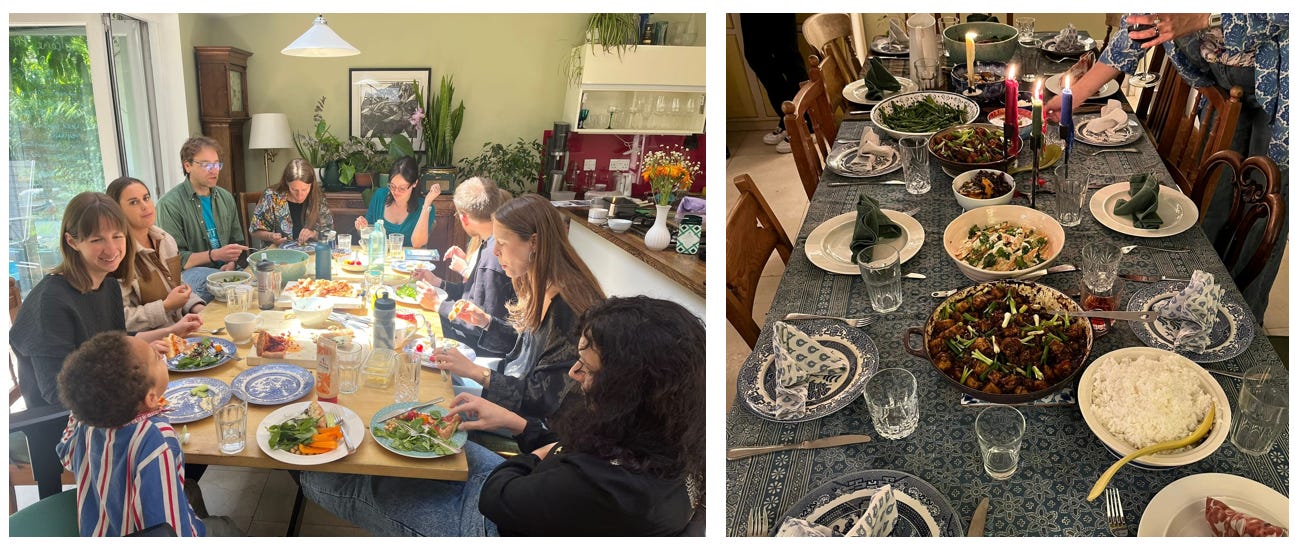
SP: Let’s go a little deeper on that: Can you give a little bit of the texture of what it looks like, feels like, smells like to live in an intentional Christian community? How are you being held in that? How are you being challenged in that?
There are seven of us at the moment in what is essentially an 1,800 square foot house. Americans are absolutely horrified about this. But for London, it’s a big family home, and there are a lot of us. We have our own bedrooms, but otherwise all the space is shared, which is a source of formation in itself.
We have what is often known as a “Rule of Life,” which is what the monks called it. “Rule” essentially means a ruler or a measuring stick; it’s not a law that you can break. We have decided who we want to become collectively: our principles and values and ethos. Then we have organized our time, our choices, and our attention to make it more likely that we live by these principles and values. For example, we wanted to be prayerful, so we pray together three mornings a week at 6:45 AM. I loathe and detest this ritual with every cell in my being, and I’m always grateful I’ve done it afterward.
We have a house night where we invest in our relationships. We have an admin meeting. We have a once-a-month day of fun, because we’ve found that we have to match the amount of admin we do with the amount of fun we have. You can have more fun than admin, just don’t let it go the other way.
If you add all that up, we’re spending a solid eight hours a week together, which is a lot of your life to commit to other people. Not everyone does intentional community like us; in fact, there are all kinds of ways you can do it. But here’s what’s essential to making it work: You have decided with a group of people how you want to be growing up your souls in the world, you have sacrificed other options to prioritize those things, and you hold each other accountable to these priorities, because it’s much easier to do if there’s a small amount of social pressure.
SW: It strikes me that it’s a Christian community, and a lot of what you’re talking about, like commitment, sacrifice, and prayer, can be very religious things. Do you think that community on its own is enough — coming together with other people and connecting socially, for instance — or does it need to be grounded in tradition, transcendence, or something that looks and feels a little bit more spiritual?
I’m very skeptical about community for the sake of community. If what is driving you together in the first place is loneliness, and then things get hard, and in that relationship you start feeling lonely because it’s hard, then what is holding you together?
Over history, necessity is what held us together: We needed each other. In a community, you had a mix of skills, and you shared those skills. When the hurricane came, you fixed each other’s barns. You couldn’t survive without each other.
There was a huge flowering of intentional communities in the 60s and 70s. They were gathered around some really big ideas, too. But they didn’t have a particularly realistic understanding of human nature. They weren’t accounting for power dynamics. They weren’t accounting for discomfort. They weren’t accounting for, in my language, “the sinfulness of the human heart.” So they didn’t hold; often, they catastrophically imploded.
Big ideas are essential though: Without a big idea — without a third thing — it’s really difficult to navigate the hard times. It doesn’t have to be religion. I’ve got some friends who are polyamorous and are very committed to the idea of reimagining the family. There’s a liberatory Marxist politics that they are working on together, and that’s enough to hold them. Unless there is a reason for you to surrender some of your preferences and compromise in the moment for the good of the other — unless you’ve got a strong story about why you should make these sacrifices — you won’t be able to do it.
Community doesn’t work under individualism. Unless you have something that is pushing back on individualism, it won’t work. It will just be a house share like Airbnb, or something else the market is selling you and calling “community.”
SP: You just used this phrase, “The sinfulness of the human heart.” You don’t hear that too much in polite modern life. I talk to a lot of people, and I’m pretty certain you’re the only one who brings it up. So what does sin have to do with it?
How did I become the sin woman? That was a swerve.
Disclaimer: I’m a self-taught theologian. There will be many Christians who disagree with me, but I understand and define sin as disconnection. My understanding of the Christian anthropology is that we are not individuals, but persons made for relationship. People get that from the Trinity. People get that from Genesis. We are made for relationship with God and with each other; that is what it means to be fully alive.
When someone asked Jesus, “Can you sum up the whole law?” He says, “Love the Lord your God with your heart, soul, mind, and strength, and love your neighbor as yourself.” These horizontal and vertical relationships are the ball game. Full aliveness is living into right relationship with our own souls — actually listening to our deepest longings and not our surface-level cravings which mislead us. Full aliveness is living into right relationship with other people. Full aliveness is living into right relationship with the Earth and Creation — which we have all so massively fucked up — and with God.
The reason we are interested in this whole topic, and your whole newsletter exists, and all my work exists, is that we are made for more community and more relationships than we currently have. There are some systemic reasons that we don’t have these relationships, and there are some reasons that are entirely our own fault. The other definition of sin that both Luther and Augustine used is “homo incurvatus in se,” which means “humanity turned in on itself.” And that’s what I mean by sin: We’ve turned in on ourselves, when we are made to grow out towards each other.
SP: The way you talk about sin seems to be accompanied by a dose of grace and forgiveness.
My definition of sin is not loaded with shame and guilt. It is a way of naming tendencies in ourselves — tendencies that are physically and spiritually part of ourselves — which trip us up and stop us from being fully alive. This contrasts with the story we get sold in our culture: that we’re fundamentally good people if we could just deal with some of our bad patterns. So I find the concept of sin quite psychologically realistic and relieving.
I mainly think about sin in relation to myself. We’ve had a new housemate move in. I was annoyed that I couldn’t get into the bathroom to brush my teeth when I needed to. I was stomping all over the house and feeling resentful of this housemate who had no idea about what I wanted. I needed to build up the courage to have the conversation about it; I needed to be vulnerable enough to experience the slight relational friction and be like, “Can we figure this out together?” But I just wanted my preferences. I was like, “I want someone to magically know what I need and the world to adapt to my preferences. And why the hell is it not doing so?”
Because I believe in the possibility of grace and forgiveness, I can go, “Oh, hi tiny, confused inner child. What do you need? You need forgiveness, you need to find steadiness, and then you need to grow past it.” If what you get is shame and guilt, which is exactly how it’s communicated in some parts of the church, then that just can lead to ever more disconnection. When you continue to hide those bits of yourself, you never bring them into the light and you never move past them into connection.
SP: How is what you’re describing with sin and grace different from what modern therapy culture sells us in terms of self-love and self-care, especially as we reflect on ourselves in relationship to community?
I’ll start with a caveat: There are incredibly healthy and humane forms of therapy that I and others have benefited from. But most therapy is working on a fundamentally individualistic anthropology.
I’m going to say something that I don’t know if I fully believe, because it’s the first time I’ve articulated it: I don’t believe in self-love. I think love is a relational concept. As John Vervaeke says, “Meaning is a relational concept.” I don’t believe you can make your own meaning. We only can make it collectively. We can receive love from other people and then remind ourselves of that love from other people in moments where we’re feeling sore and sad. But if you have received no love from anyone ever, of course you cannot love yourself. This is something we receive and give to each other.
We can access self-compassion and kindness, but those are taught. They are received. Ultimately, as someone who believes in God, I believe the love that we’re seeking is in God; then, we have it refracted and reflected through others. But insofar as therapy actually doesn’t understand humans as relational and is working on tiny little parts of the system — which not all of the schools of therapy are — it’s maybe helpful, but not sufficient.
SW: This conversation is more spiritual than many we have here at Connective Tissue. What is the connection between the spiritual, sacred conversation we’re having and the civic, political situation that we’re in? Do you see those two universes as the same universe? Is there more overlap that’s needed?
Absolutely. It’s different language for the same thing. Policy language is useful when you’re designing systems and you’re trying to allocate funding, but it is essentially a mirage, right?
The deep longing of the human heart to see and be seen and know and be known is unavoidably spiritual, and that is why we want there to be a thriving civic infrastructure in our neighborhood. We want to be able to show up somewhere and have someone say, “It’s really nice to see you. We missed you last week.” That might involve the need for physical space or funding, or people not being so caught up in hustle culture that they have enough time to go to choir. But all of these things are scaffolding and the creation of conditions — this is giving me goosebumps — for us to get to do the thing that we were made for.
So I both want to cheer on and celebrate the people trying to create the civic infrastructure, and say, “Don’t forget what this is really about — this tender, uncontrollable, vulnerable humanness underneath it.” Sometimes, those things can get disconnected, and then even in the attempts to create the conditions for the full aliveness that we long for, everything just becomes professionalized and controlled and bureaucratic. If that happens, have we actually done any good in the world?
SP: This brings up a tension I’m wrestling with right now. Your response is pointing to our need for collective spiritual transformation as individuals — to see that we belong to one another. But what can create this collective spiritual turn amidst a culture of hyper-individualism, isolation, and techno-materialism that tells us our humanity is replaceable?
Maybe the answer is: “There is no answer.” Maybe the desire to facilitate this spiritual shift is an attempt to exert control over something that cannot be controlled. But what then must we do? Or, perhaps better put: How then must we be?
It’s not an accident that I started off at the BBC thinking that I could get my hand on the levers of culture, and then I ran a think tank believing I could shift the policy landscape, and now I just live in a commune. I am slightly at the end of myself on this scalable change question, other than these ideas like John Berger’s “pockets of sanity“ or John Paul Lederach’s “critical yeast.” It’s these metaphors that point to how change happens that’s small and relational and local, and then ripples outwards. So what is the work that is asked of us? It’s personal, and in our families, and in our communities, and in our networks.
My best guess right now is to loudly and unashamedly tell a different story. It is to be prepared to be the weirdo who says things like, “Sin might be helpful,” and “There’s no such thing as self-care or self-love.” And then, it is to doggedly — and, ideally, slightly playfully — wave a flag for a possible different logic and a possible different kingdom, and try to live it with steadily reducing levels of hypocrisy.
 | A guest post by
|
 | A guest post by
|
My goodness... if I wrote about all the things in this interview that resonated with me, my comment would be longer than the article. Thank you for this.
Since I can't help myself, a few things that extra stood out to me:
- The line "community for community's sake" landed. I'm not sure why, but I know it's touching on something that I've been feeling. My whole world has been supporting people who are building community (myself included) to fight loneliness. But I can't shake the feeling that the form of community we're creating isn't even scratching at the surface.
- Funny enough, I found myself recently leaning the other way on the self-love topic as a result of my spiritual journey. I used to focus on love entirely in the relational. But it's been through my spiritual practice (zen buddhism) and therapy (IFS primarily) that what I would call "self-love" naturally emerged... and it was only after I was able to find that love within that I found myself capable of being in deeper, more meaningful, and loving relationships with others. Ultimately, I see it as two sides of the same coin. And to get all "zen" about it, my view is that there's no separation. To love others is to love the self. To love the self is to love others.
- I recall learning that the original meaning of "sin", the way jesus used it, was something closer to "misalignment" or "out of harmony". If we're truly relational beings in the way you describe (I agree that we are), then sin does start to sound a lot like "disconnection"
- Last one, I promise. This line: "If you want to change the world, you have to be a relationship ninja and come to care for the people whose minds, behaviors, and lives you’re trying to change." Wow. This rings very true. I identify as being liberal/left-leaning, and this helps capture what has felt uncomfortable to me about the way many on the left go about trying to create change. I don't get the sense that there's much care for the lives, hearts, and minds of the people we're trying to convince.
Thank you again for this wonderful interview.
Relationship as a theory of change - LOVE that so much. I may use that. Over 30 years of nonprofit work in different sectors, my truth is solidly behind this idea - change happens through relationships far more than programs, activities, or buildings.