

Nobody to Call
We interviewed 30 men without degrees. Most are almost completely disconnected, but they don’t want to be — they’re yearning to connect and contribute, and they just need to be called in.


Today, we’re publishing Nobody to Call, a deep qualitative research project on friendship, community, and purpose among men without college degrees. The following essay introduces how the project emerged, what we heard during our interviews, and what we made of what we heard. We invite you to read the piece, and then go deeper by exploring our Interactive and reading the full Nobody to Call Report and Case Studies. We hope this project offers a small window into the textured, human experiences of a group of people who are often talked about but are rarely heard from directly. - Sam + Soren
Left Alone
This project emerged from a close friendship. Soren served for nine years in human intelligence collection roles for U.S. Special Operations. Sam founded and led the Armed Services Arts Partnership, where he spent seven years helping veterans and their families reconnect with a sense of camaraderie and purpose in civilian life. We met during a period of transition for us both, connecting around a shared commitment to making inappropriate jokes, and a shared disillusionment with the shallow public discourse around class, gender, and community. In the years since, Soren began building new strategies for large-scale digital strategic communications, and Sam began researching and writing on the intersection of civic life, social connection, and class.
In 2024, Sam teamed up with the Survey Center on American Life to design and publish the “Disconnected” survey report, which showed the extent to which the college degree has become the dividing line in American civic life. We found that, compared to college grads, Americans without degrees are significantly less likely to participate in religious and community groups, and they have far fewer close friends and people to turn to for social support. What we didn’t find was evidence of the so-called “male loneliness” crisis; education was the dividing line in Americans’ relational lives, not gender.
But there was still an education and gender story hidden in the data. For the past several decades, even as overall college completion rates have increased for women and men, women have been enrolling in and completing college at significantly higher rates than men. Men today make up just over 40 percent of those who enroll in and complete four-year colleges, compared to nearly 60 percent in 1970. More Americans, especially more women, are graduating from four-year colleges, but a growing proportion of the Americans who aren’t graduating are men. So as the college degree has increasingly become the great sorting function in American life, men without degrees have increasingly found themselves sorted out.
This education and gender story did show up in the qualitative interviews we conducted as part of that same “Disconnected” project. Of the 20 survey respondents we spoke to — women and men, with degrees and without degrees — it was the three men without degrees we interviewed who stood out for being completely untethered. The experiences of isolation these men shared were vulnerable, raw, and, at times, heartbreaking. But their textured, human stories were hidden behind sterile data points that ultimately became fodder for op-eds in major outlets and hot takes on Twitter.
Sam and Soren shared their disillusionment over months of group texts. As we saw it, there was no “male loneliness” crisis, but a crisis of men without degrees being “left alone” by society. The struggles of these men were being instrumentalized for clicks and engagement, and the richness and particularity of their stories were being flattened into lifeless and abstract data points. People were misunderstanding the data, and the data was leading to misunderstanding.
Nobody to Call
The nature of disconnection is that your life — with all its messy experiences and stories, all its emotions and feelings, all its struggles and aspirations — is mostly invisible to the outside world. We decided to embark on this research project, Nobody to Call, to make the invisible visible: to humanize and provide texture to the lives of a group of people who are often talked about but are rarely heard from directly.
Our approach for doing this was simple: talk to guys about their relationships. We conducted one-on-one virtual interviews with 30 American men, all of whom ranged in age from their mid-twenties to their mid-forties, and none of whom had college degrees. Our interviews lasted 30 to 45 minutes, and during each interview, we asked the same questions about friendship, community, role models, and purpose. While we make no claims about generalizability, we believe the men we interviewed are largely representative of men without degrees in their age range. What follows is the prevailing storyline we heard across our interviews.
Most of the men are almost completely disconnected. Many have no close friends, no connection to the community, and no mentors or role models. It’s not just one thing that’s missing for living a flourishing, connected life; it’s often almost everything: friends, mentors, neighbors, community, and weak ties. As Josiah, a 40-year-old from South Carolina, succinctly shared: “Except for my family, I don’t regularly do anything with anybody.”
The disconnection experienced by many of these men emerged over time through a process of slow drifting away. This slow “drift” often started when they graduated high school, and continued throughout adulthood. For many, the loss of the consistent structure of school — coupled with the lack of a new structure like college, the military, or stable work — contributed to the atrophying of their relationships over time. Silvio, a 28-year-old from Washington, pointedly described the friendship cliff he experienced after graduating high school:
“When I was in high school, I had friends that I would see on a regular basis. I had classes with them, I’d see them at lunch … You keep these people at a distance for a reason, because you know you may never see them again after senior year and you graduate. And that’s true for probably 99% of them. I don’t know where they’ve gone off to, and I don’t necessarily care one way or the other … I might have made close friends if I’d gone off some place else, but I haven’t left where I am. I’m still here...”
Even where connections do exist, they are often tenuous ties — one friend, one mentor, one group — which creates a single point of failure for their relational lives. For these men, new relationships are hard to make, existing ones are easy to break, and common life changes, like a move or a new job, often make the difference between living somewhat connected lives or living in isolation. Jordan, a 43-year-old from Tennessee, reflected on how one friend moving left him friendless and alone:
“We lost touch, and we weren’t hanging out. Then he moved to Seattle, and with the time difference, it became a lot more difficult to hang out — even just talking on the phone. It’s not like we could just say, ‘Hey, let’s go see a movie or let’s do something this weekend.’ They’re in Seattle, I’m in Tennessee, so you just lose touch. I don’t think I’ve talked to him in probably a year and a half … I feel lonely. I feel like I don’t have connections, and on a broader scope … I don’t have anybody that I feel like I matter to.”
But most of these men haven’t closed up or given up. They’re yearning for connection and they’re yearning to contribute to something bigger than themselves. Most men actively want to make more friends, to get more involved in their communities, and to experience more purpose in life. Notably, they see this purpose as something that can only be realized relationally — as fathers, uncles, mentors, and community members. As Cedric, a 31-year-old single father from Texas, put it:
“I think my purpose is not only to give back to my own kids, but to youth in general … That’s how I look at all of that stuff [I went through] — so that I would be able to turn around and do the same for somebody else, and hopefully, save them the way the YMCA saved me … for people that their father wasn’t in the home, they need a positive role model — somebody to look up to.”
Still, the gap between the men’s expressed desire for connection and their ability to fulfill this desire often seemed too big to bridge. Most of these men struggle to identify where to begin to connect with friends and community, and they often confront material barriers (e.g., money, time) to building and sustaining relationships. Yet, they often blame themselves for having neither the confidence nor the skills to be more connected, and they feel it’s their responsibility to “fix” themselves before building new relationships. Deion, a 29-year-old from Ohio, exemplifies the social stuckness that so many of the men we interviewed feel:
“Part of it is social anxiety … I just don’t know how to interact properly … I hate to admit it, but I’ve always been kind of shy and to myself … Now that I’m getting older, connection is a big thing, so I’ve been trying to do that more. But again, I suck at it. I’ve been going to therapy, trying to figure it out, trying to put myself out there more — little by little — so I can gain certain skills. Because I think it’s very important — connection and community. So I be trying to work on that, with a little progress, but not much.”
Calling In
We spent a lot of time debating whether we should close our report on a hopeful note. Ultimately, we landed on no.
For most of the men we interviewed, the gap between their yearning for connection and their capabilities to realize it seemed too big to bridge. That’s because most of these men weren’t just lacking one relationship — be it with a friend, a mentor, a neighbor, a community group, or a house of worship — they were often lacking almost every relationship. Ten to twenty years after leaving high school, most of the men we spoke to found themselves either completely disconnected, or one tenuous tie away from complete disconnection.
We, as a society, have let these men down.
We’ve built a meritocratic system of higher education that has made the four-year degree the cost of entry to living a good life in community. We’ve built a financialized economic system that has undermined the very foundations of working-class life. We’ve built a culture that prizes a form of hyperindividualistic, consumerized choice at the expense of the commitments, communities, and connections that have historically bound us together. There can be no silver bullet or quick fix for this interlocking and compounding process of social disintegration that has been several generations in the making.
The dark irony is that most of these men saw it as their personal responsibility to rebuild their relational lives from scratch. But relationship-formation doesn’t work this way, and never has. Historically, relationships and community have been more the gifts of generational inheritance than the prizes of entrepreneurship. We inherit many overlapping webs of association, which, sustained by tradition, obligation, and necessity, follow us throughout our lives. The relationships we form through these shared associations — family, religion, community, place, or otherwise — beget new relationships and new associations. Contrary to the self-help ethos that pervades our society, relationships and community have never been solely individual choices to make nor individual responsibilities to develop.
But just as we, as a society, have let these men down, we also have an opportunity to lift these men up.
Policy can and should play a role here. We need programs like state service years and cohort-based vocational training to create accessible, structured pathways for relationship-building during the adult transition. We need policies like fair workweeks, living wages, worker boards, paid family leave, and an expanded child tax credit to strengthen the material foundations of working-class life. Policies like these are important, but policy alone is not enough.
If the challenges these men face are relational, our collective action must begin relationally. Families, the one form of connection most of these men still have, can see it as their responsibility to get their isolated sons, brothers, fathers, and uncles more connected with friends and community. Religious and community groups should support the efforts of these families so they’re not shouldering this responsibility on their own. And these same groups should make dedicated efforts to intentionally invite disconnected men to participate and belong — just as the YMCA did 175 years ago.
The good news from our interviews is that many men without degrees will be receptive to this kind of outreach. The current cultural narrative about these men — that they are nihilistic, resentful, closed-up loners — is almost entirely wrong. Most of these guys want to open up, connect, and contribute, but they need to be called in. As Deion shared:
“I’m just trying to figure out something I want to do in my life that’s gonna change the world — or the community — in a positive light. Now I’m just looking for purpose, something bigger than me, something where I can make the change in someone’s life or my life. I’m just here, just passing by — and that doesn’t sit well with me.”
Will we answer the call, or continue to leave them alone?
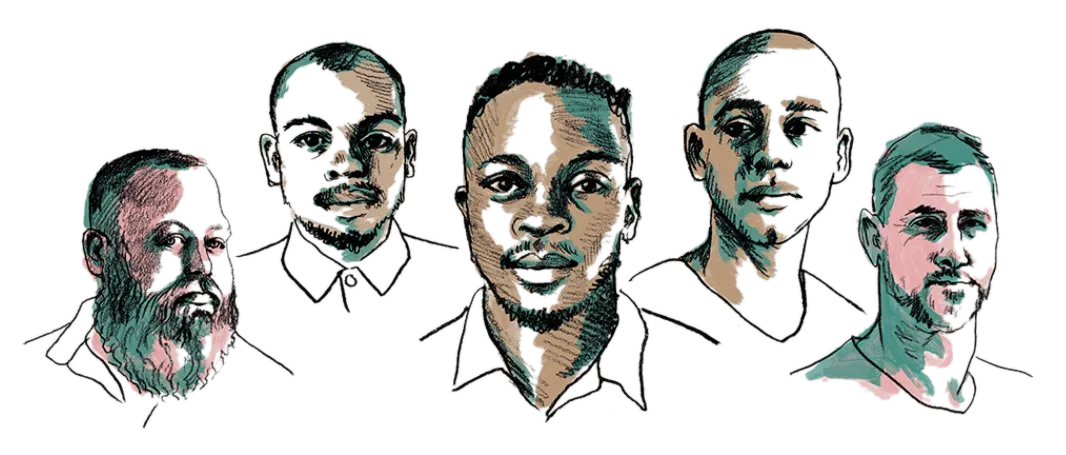
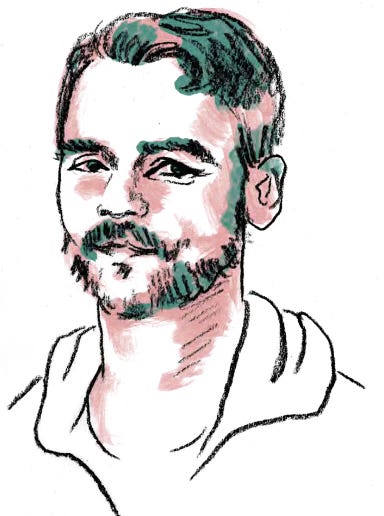
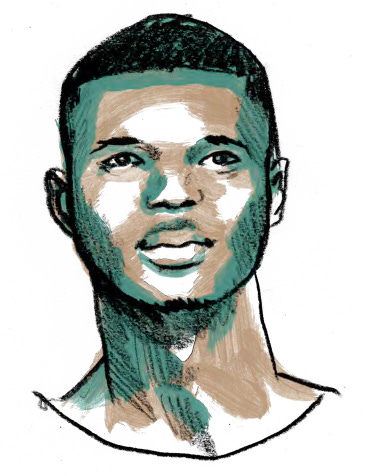
*Note: The illustrations used throughout this project were hand-drawn by EJ Baker. They are not literal portraits of the men we spoke to, but rather represent them in age and ethnicity. This approach allowed us to further humanize these men without compromising their anonymity.
 | A guest post by
|
what incredibly important, insightful work. So glad you are uplifting these voices rather than just theorizing about them
incredible work as always.
i've only read this essay so far. excited to read the full report. but i'm curious if these men have attempted to engage with local religious communities, men's groups, or other accessible spaces where they might find connection and form new relationships.
also, i'm curious about the relational dynamics with the people they work with. do they struggle to form relationships through work as well?